User experience design
Empathy driven experiences.
Your visitors arrive with a purpose: to give, to book, to learn, to act. The question is whether your website makes any of that easy. We start by understanding your audiences properly, then design an experience built around what they actually need.
How the UX process works
Four stages. Each one feeds the next. Every decision grounded in your audiences and your goals.
We run workshops with your team to understand your organisation, your brand's purpose, and the people you need to reach. Empathy mapping and user personas come out of this stage, grounded in real behaviour rather than assumptions.
With your audiences understood, we map the information architecture, user journeys, and content strategy. Structure before style. Every page gets a clear purpose and a clear next step.
Wireframes become a visual reality, true to your brand and built for your users. We design for the content you actually have, with attention to the small interactions that make a site feel considered.
Designs are handed over for build, tested thoroughly across devices and browsers, and launched. You leave with a site that works as intended, a team that knows how to use it, and a clear plan for what comes next.
Featured
projects

What we offer
Everything you need to design an experience your users will trust.
UX design at Subism covers the full journey from research to live website. Discovery workshops and empathy mapping to understand your audiences. Information architecture and site structure planning. Interactive wireframes for desktop and mobile. Full UI/UX visual design. Accessible development to WCAG 2.1 AA. Post-launch reviews and iterative improvements.
Everything is done in-house. Design, UX, development, and project management, under one roof, with no handoffs to third parties.
Who it's for
You're probably a good fit if any of this sounds familiar.
Your website is not driving the conversions you need, whether that is donations, registrations, ticket sales, or enquiries. You are rebuilding or relaunching a site and want to get the structure right before design begins. Your current site works for one audience but not for others. You need a website your non-technical team can manage and update without waiting on a developer.
You work for a charity, a social enterprise, an events organisation, or a purpose-driven business that needs a site that reflects what you stand for.
We work with organisations of every size, from small charities to national brands. What they share is a need for a site that performs.
Why it matters
The right UX design increases the actions that matter to you.
When a donation page is easy to use, more people complete it. When an event listing is clear and conversion-focused, more people buy tickets. When your information architecture matches how your audiences think, not just how your organisation is structured, more people find what they need and do something about it.
UX design is the difference between a website that looks good and a website that works. It reduces bounce rates, increases time on page, and gives your team a platform they can grow. Organisations that invest in UX see better results from their digital presence, and they see it across every metric that matters.

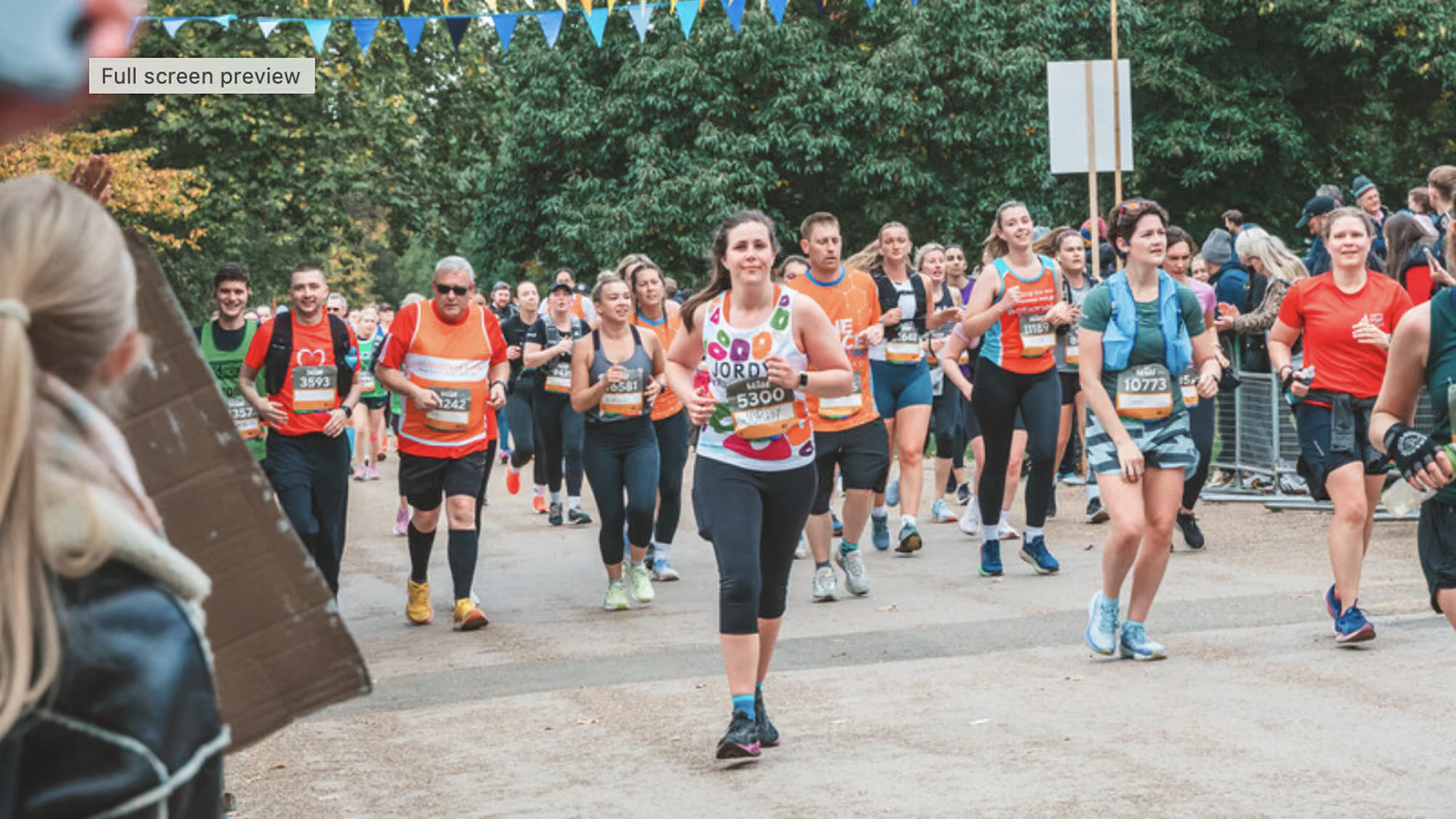
Our partnership with Subism has created a website that truly elevates our supporter experience. It’s intuitive, modern and built with the flexibility we need to grow. We are confident this new platform will play a big role in helping us achieve our future fundraising goals. Subism have been fantastic every step of the way.
Questions about
UX design
What does UX design include?
UX design covers everything that shapes how someone experiences your website: the structure, the navigation, the content hierarchy, the page layouts, the calls to action, and the interactions. At Subism, UX work begins with research: discovery workshops, empathy mapping, and user personas. It moves through information architecture, wireframing, and visual design, all the way into how the site is built and tested.
Good UX is not just about how a site looks. It is about how it works, and who it works for.
How long does a UX design project take?
The timeline depends on the size of the site and the number of distinct audience journeys that need to be mapped. Discovery and wireframing usually take three to four weeks. Visual design follows for four to eight weeks. Build, testing, and deployment complete the project.
We plan all of this with you at the start, with clear milestones and regular check-ins throughout.
What is the difference between UX design and web design?
UX design focuses on how a website works: the structure, the user journeys, and how easy it is for people to achieve what they came to do. Web design focuses on how it looks: typography, colour, visual hierarchy. The two are closely connected.
At Subism, we do both, starting with UX to make sure the structure is right, then applying visual design that serves that structure rather than overriding it.
Do I need a discovery workshop before design begins?
For most projects, yes. The discovery stage is where we learn about your organisation, your audiences, and your goals. Without it, design decisions are based on assumption rather than evidence. The workshop covers your brand purpose, audience empathy mapping, content priorities, and conversion goals. It takes half a day to a full day with your team.
The output directly informs the structure and design of your new site, and most clients find it one of the most valuable parts of the whole project.
How do you approach accessibility in UX design?
WCAG 2.1 AA compliance is standard on every project. Accessibility is built into our process from the start: in how we structure information hierarchy, in how we design interactive elements for keyboard and assistive device navigation, in how we handle colour contrast, image alt text, and semantic markup.
We do not treat it as a final checklist. It is part of how every site is designed and built.
Can you redesign an existing website rather than build from scratch?
Yes. Many of our projects involve improving or rebuilding existing websites rather than starting from zero. We begin with an audit of your current site: what is working, what is not, where users are dropping off, and what the content structure looks like.
From there, we apply the same discovery and design process to make sure the new site solves the real problems, not just the surface-level ones.
Do you offer UX design as a standalone service, without development?
Yes. If you already have a development team or an existing platform, we can scope UX and design work as a standalone engagement. This typically covers discovery, wireframing, and visual design, with all assets handed over ready for your team to build from.
Get in touch and we can talk through what makes sense for your situation.