Why great digital experiences start with shared understanding
Good design starts with understanding. Great design starts with shared understanding. That's an important difference.
Most organisations already know the value of user research. What often gets overlooked is bringing together the perspectives of everyone involved. The people leading the organisation, the team using the website every day and the people it's ultimately designed to serve.
In our experience, that's where the best digital experiences begin.
Every audience sees a different problem, and has a different need
One of the biggest mistakes organisations can make is assuming there's a single view of what success looks like.
In reality, every group experiences a digital product differently.
Leadership is thinking about organisational goals and growth.
Marketing wants engagement and conversions.
Fundraisers want to increase donations.
Content editors want to update pages quickly without fighting the CMS.
Customer support teams want fewer repetitive enquiries.
Then there are the people you're ultimately designing for. The visitors using your website, the customers buying your products, the patients using your app or the supporters donating to your cause.
Each of them arrives with different motivations, different expectations and different frustrations.
If you only design for one of those audiences, you're only solving part of the problem.
The best digital experiences are created when you understand them all.
Our job isn't to have all the answers
People often ask what happens during the discovery phase of a project.
The simple answer is that we listen.
Before we open Figma or sketch a single wireframe, we spend time understanding the organisation from different perspectives.
That means bringing people together through collaborative workshops, speaking to stakeholders from across the organisation, building user personas, mapping user journeys and understanding the needs of both internal teams and external users.
Those conversations often uncover things that weren't part of the original brief.
Sometimes the challenge isn't the homepage.
Sometimes it isn't the navigation.
Sometimes it isn't even the website.
We've worked on projects where different departments all had different ideas about who their audience actually was. Until everyone shares the same understanding, it's incredibly difficult to design something that works for everyone.
That's why discovery is such an important part of our process.
By the time we begin creating wireframes, we're no longer making assumptions. We're designing around real people, real behaviours and real needs.
"Good design isn't about having all the answers. It's about asking better questions."
Listening to the people who know best
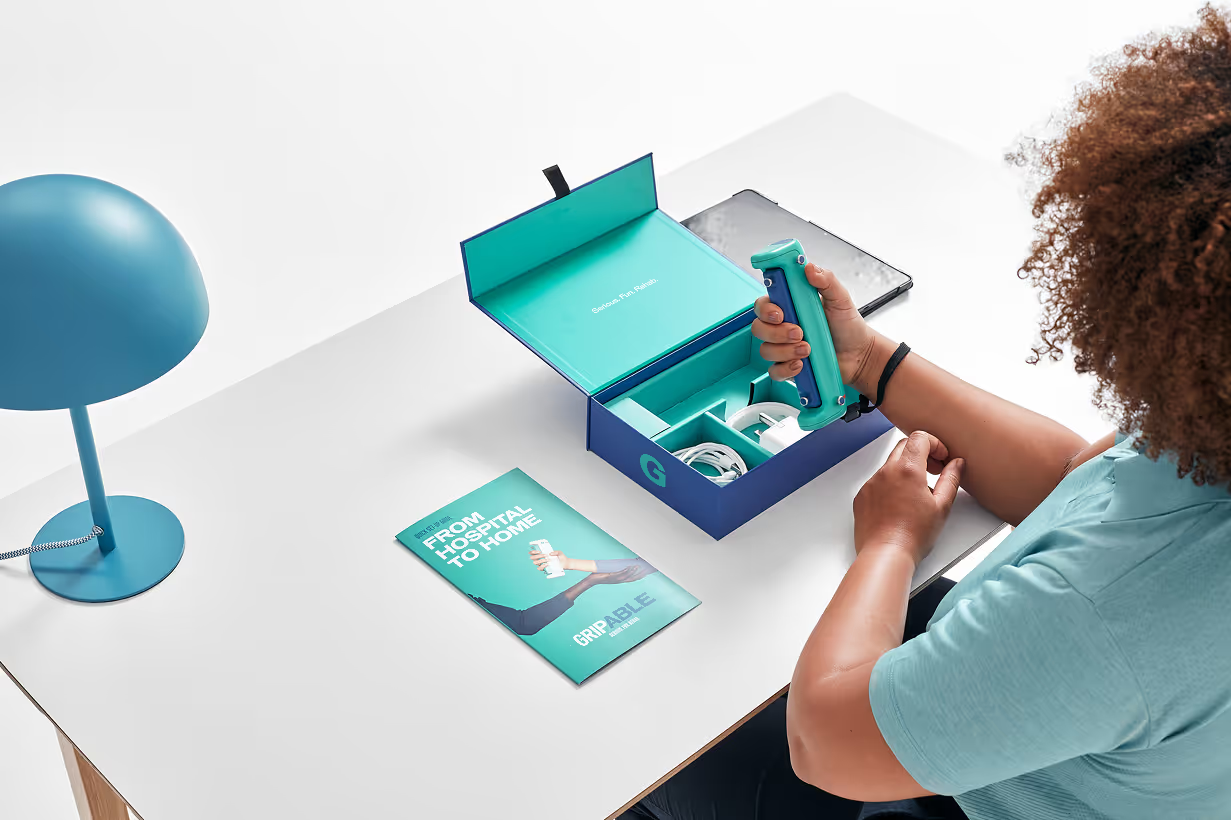
One project that really changed the way I think about UX was Able Care.
On the surface, we were designing a rehabilitation app.
In reality, we were designing two connected experiences for two very different audiences.
Patients needed an app that felt simple, reassuring and easy to use, particularly when recovering from injury or living with limited mobility.
Clinicians and physiotherapists needed accurate, structured data that would help them assess progress, identify trends and make informed decisions.
Those goals could easily have conflicted.
Rather than making assumptions, we worked closely with the physiotherapists who support patients every day. Their understanding of the rehabilitation journey, common pain points and physical limitations was invaluable. They knew where patients lost confidence, where they became fatigued, which movements caused discomfort and how seemingly small details could influence the quality of an assessment.
One of the biggest things I learnt during that project was how easy it is to make assumptions about users.
Going into the project, I expected many of the challenges would centre around eyesight, dexterity or confidence using a phone or tablet. Some of those assumptions were right, but they only scratched the surface.
We quickly realised that the way exercises and instructions were presented could actually influence the results we were trying to measure. If someone became fatigued while standing, lost concentration during a balance exercise or didn't have enough space to complete a movement safely at home, it wasn't just their experience that changed. It affected the data being captured and, ultimately, the clinician's ability to assess their progress.
That completely changed how I thought about UX.
We weren't simply designing an interface that was easy to use.
We were designing an experience that helped capture reliable clinical data.
Throughout the project, we tested each stage of the user experience with representative user groups. Watching people interact with early prototypes highlighted where journeys could be simplified, where language needed to be clearer and where small changes made a big difference.
Those insights shaped the wireframes long before we started refining the interface.
"Good UX wasn't created by us sitting in a room. It was shaped by the people who use it every day."
Designing where everyone's needs overlap
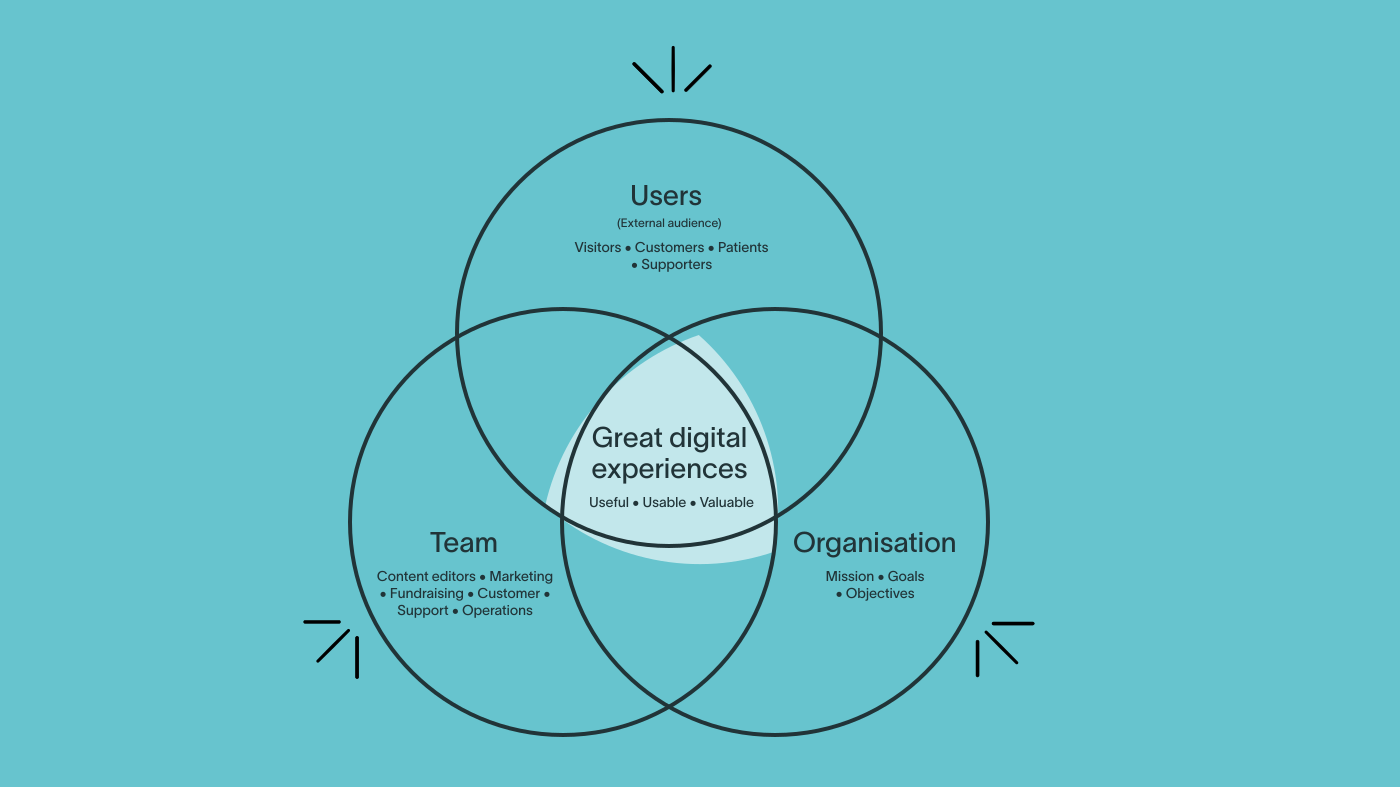
One thing we've learnt over the years is that successful digital products aren't designed around a single audience.
They're designed where three things overlap.
The needs of the people using the product.
The needs of the team managing it every day.
The goals of the organisation.
When those three things align, good decisions become much easier.
User journeys become simpler.
Content becomes easier to manage.
Navigation becomes more intuitive.
The interface feels effortless because it's solving real problems rather than imagined ones.
The best ideas rarely come from one person
Some of the most valuable insights we've uncovered haven't come from strategy documents or board meetings.
They've come from the content editor who updates the website every morning.
The volunteer who speaks to service users every day.
The fundraiser who knows exactly why people abandon a donation.
The physiotherapist who understands the challenges their patients face before they even open an app.
Those are the people who live with the problem every day.
As designers, our role isn't to arrive with the answers. It's to bring those voices together, ask the right questions and turn those insights into something that genuinely improves people's experience.
Because the best digital experiences don't start with design.
They start with listening
Latest Insights
More news, views and insights from Subism HQ



Related Projects
If you were interested in this article you may also like these projects: